
The Science of Sustainable Change
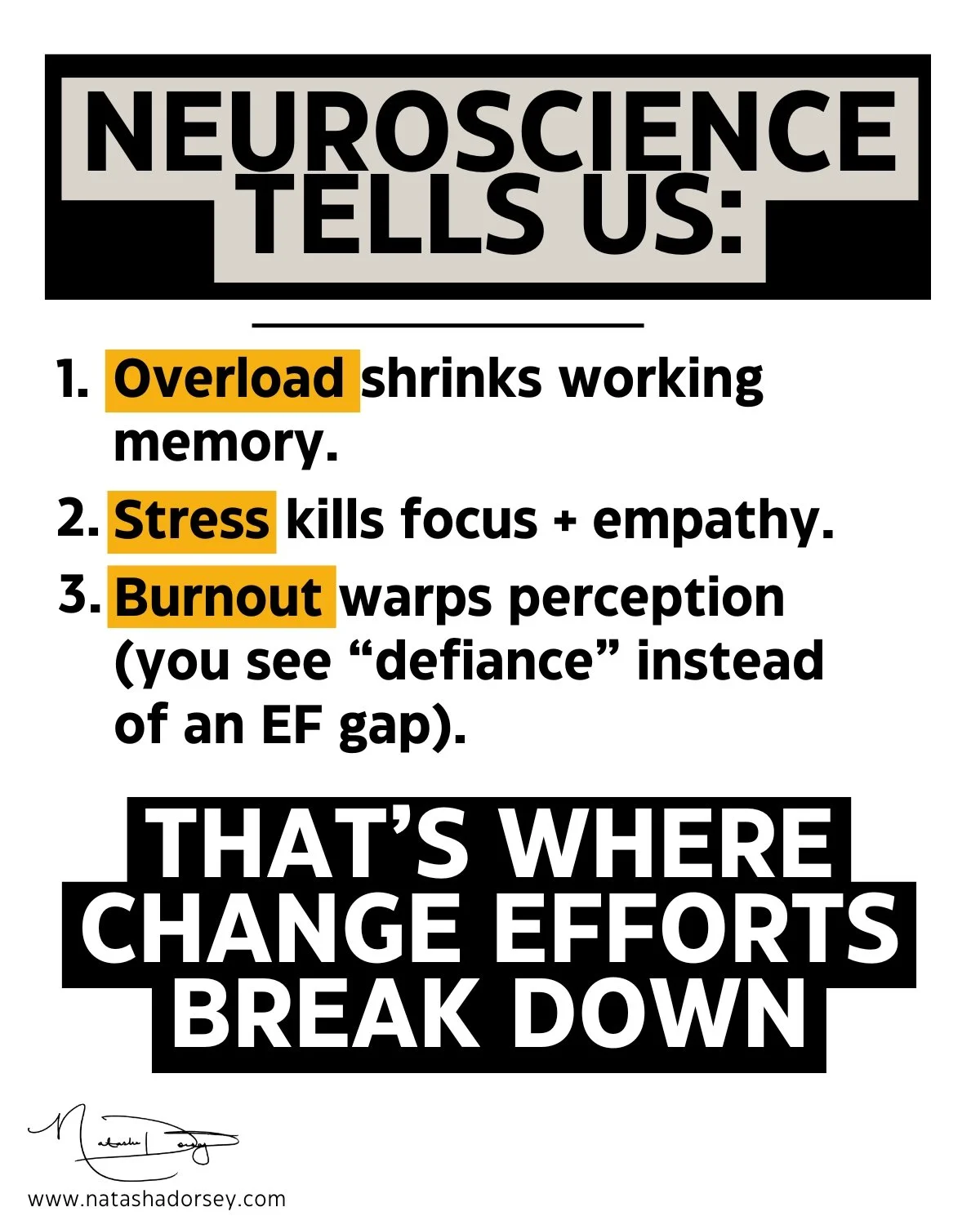
Across public systems, rising burnout, attrition, and implementation failure are often treated as individual performance problems: issues of resilience, mindset, or engagement. In reality, these outcomes are predictable consequences of system design. When policies, structures, and change initiatives exceed human capacity, systems do not fail immediately; they continue to function by relying on overwork, informal labor, and a shrinking group of high performers. This creates the appearance of stability while increasing long-term risk.
Optimizing the Educational Ecosystem
Learning is shaped by interaction, not isolation.
When reform ignores cognitive load, emotional regulation, learner variability, teacher capacity, and the conditions required for deep learning, even well-intended initiatives can create overload instead of improvement.