
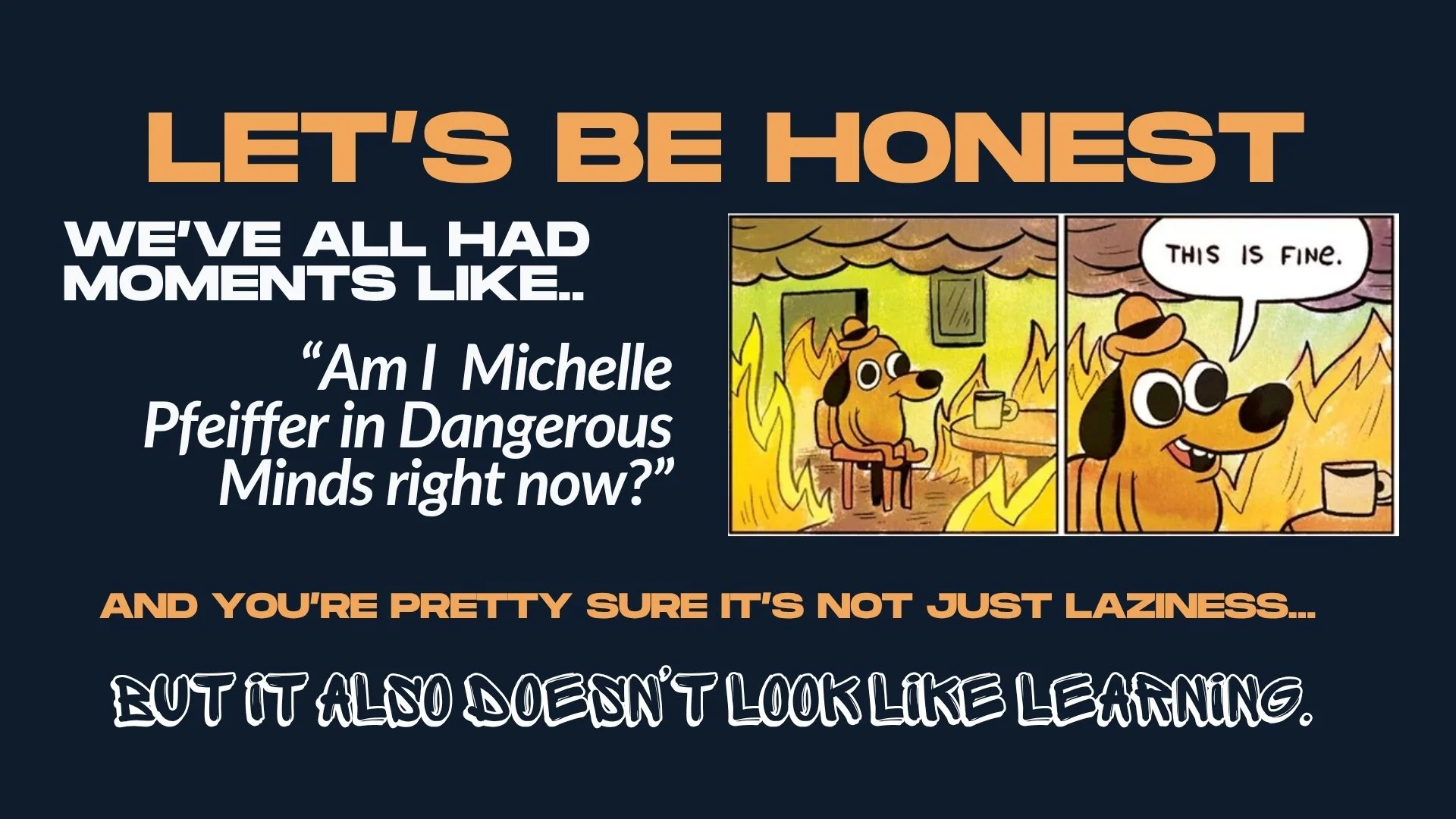
Beyond Compliance: Reducing Conflict with At-Risk Youth
Behavior may look oppositional from the outside, but underneath there may be anxiety, executive-function overload, trauma response, sensory needs, shame, disconnection, or a skill that has not yet been developed.
Burnout Does not Begin with Exhaustion.
Burnout is often a systems signal.
Systems that reduce cognitive load do not just support well-being. They proactively protect judgment, relationships, leadership capacity, and long-term outcomes.
The Science of Sustainable Change
Across public systems, rising burnout, attrition, and implementation failure are often treated as individual performance problems: issues of resilience, mindset, or engagement. In reality, these outcomes are predictable consequences of system design. When policies, structures, and change initiatives exceed human capacity, systems do not fail immediately; they continue to function by relying on overwork, informal labor, and a shrinking group of high performers. This creates the appearance of stability while increasing long-term risk.
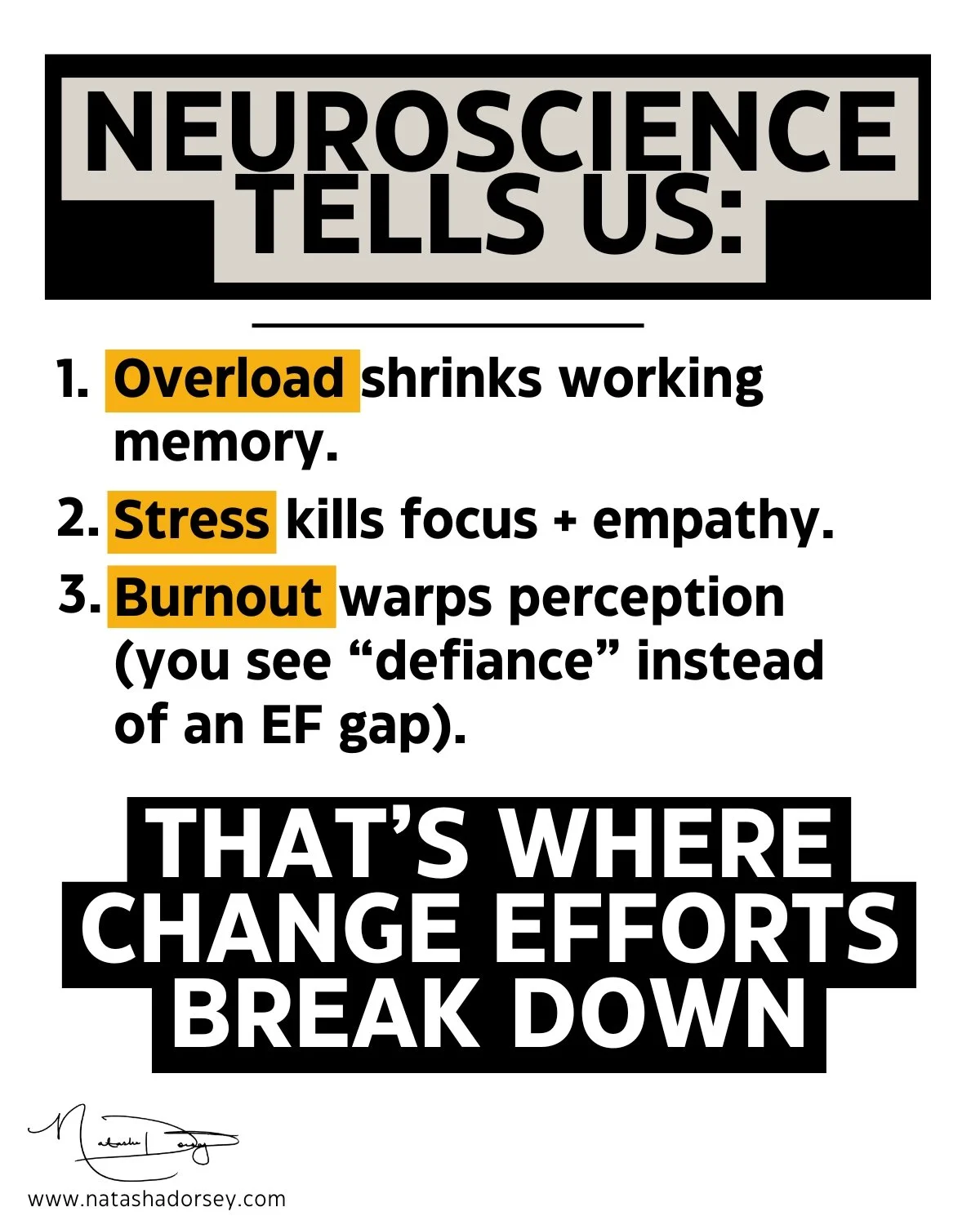
What if Burnout also Changes Perception?
PRL explores how stress, regulation, perception, interpretation, and classroom response interact as a feedback system. Burnout does not simply reduce how much educators can do; it can also shape how they see what is happening.

When There are No Teachers…
A brain-smart, humorous field guide for parents, teachers, and caregivers navigating learning disruptions with practical strategies for focus, motivation, executive function, regulation, and kitchen-table learning.
Optimizing the Educational Ecosystem
Learning is shaped by interaction, not isolation.
When reform ignores cognitive load, emotional regulation, learner variability, teacher capacity, and the conditions required for deep learning, even well-intended initiatives can create overload instead of improvement.
Big Brain Dorsey
Sometimes the greatest spark to keep learning doesn’t come from books or courses, but from the people you get to work alongside.